
YouTube is one of the largest platforms in the world for sharing videos, and it is not just for entertainment. Whether you are a creator sharing your passion, a business promoting products, or a professional building a personal brand, YouTube gives you the chance to reach millions of people. The platform is highly competitive, which means that simply uploading a video is not enough. To get noticed, your videos need to appear in search results, recommendations, and suggested video lists.
Ranking and visibility on YouTube are essential because they determine how many people see your content. Higher-ranking videos get more views, more clicks, and more engagement. If your video is buried deep in search results, very few people will watch it, no matter how good the content is. Understanding how to improve your visibility helps you reach the right audience and grow your channel effectively.
SEO, or search engine optimization, is the process of making your videos easier to find on YouTube. In simple terms, it is about using the right titles, descriptions, tags, keywords, and other elements so that the platform’s algorithm can understand your video and show it to people who are interested in your content. SEO is not just about tricking the system; it is about helping your audience find videos that match what they are looking for.
Mastering YouTube SEO can have a major impact on your channel. When you optimize your videos correctly, you can increase views, attract more subscribers, and boost engagement such as likes, comments, and shares. Over time, this not only helps your channel grow but also builds a loyal audience that trusts and enjoys your content. By learning and applying YouTube SEO, you turn your videos into powerful tools that reach more people and achieve your goals.

SEO, or search engine optimization, is a strategy used to improve the visibility of content online. In general, SEO helps websites, blogs, or any digital content appear higher in search results when people look for related information. It involves using the right words, phrases, and techniques so that search engines understand your content and show it to users who are most likely to be interested. For example, if you run a website about cooking, SEO helps your recipes appear when someone searches for “easy dinner recipes” or “quick desserts.”
When it comes to YouTube, SEO works in a similar way but focuses on videos instead of written content. YouTube SEO mean is about making your videos easy to find on the platform. This means using titles, descriptions, tags, and thumbnails that tell the YouTube algorithm exactly what your video is about. Unlike traditional website SEO, YouTube SEO also considers how people interact with your content. It tracks things like how long viewers watch your video, how often they like, comment, or share it, and how many people subscribe after watching.
The key metrics for YouTube SEO optimization go beyond keywords. Watch time is one of the most important factors. If viewers watch your videos for a longer time, YouTube sees your content as valuable and may recommend it to more people. Engagement, such as likes, comments, and shares, shows that your audience is actively interacting with your videos. Subscriber growth is another critical metric because it reflects your ability to attract and retain a loyal audience. All these metrics together help your videos rank higher, reach more viewers, and grow your channel over time.
By understanding the difference between general SEO and YouTube SEO, and by focusing on these key metrics, you can make your videos more discoverable, improve performance, and build a strong presence on the platform.
YouTube is more than just a video-sharing platform; it is a search engine that helps viewers find content they want to watch. When you upload a video, YouTube seo tool uses a complex system, called an algorithm, to decide where your video will appear in search results and recommendations. Understanding how this ranking system works is essential if you want your content to reach more people and grow your channel.
One of the main factors YouTube seo score looks at is relevance. The platform analyzes your video’s title, description, tags, and metadata to determine if it matches what people are searching for. If your keywords and topic closely align with a viewer’s search, your video is more likely to appear in their results. This is why optimizing your content for the right keywords and phrases is so important.
Engagement signals are another critical ranking factor. YouTube measures how viewers interact with your video through likes, comments, shares, and clicks. High engagement indicates that your content is valuable and interesting, which encourages YouTube to show it to more people. This is true not only in search results but also in the recommended videos section, where the platform suggests content based on what viewers have watched and liked before.
Audience retention is equally important. The platform tracks how long viewers watch your video and whether they watch it until the end. Videos with high retention rates are seen as more useful and entertaining. If your content keeps viewers engaged, YouTube is more likely to promote it to a wider audience.
For creators, understanding these ranking factors helps you make better decisions about your content. You can optimize your video titles, descriptions, and tags for search, create engaging and relevant content, and focus on keeping your audience watching until the end. By combining relevance, engagement, and retention, you improve your chances of ranking higher in search results and getting featured in recommendations, which ultimately grows your visibility, subscribers, and overall channel success.
To make your videos more discoverable and successful on YouTube, you need to focus on several important elements that the platform uses to understand and rank your content. These elements not only help the YouTube seo algorithm know what your video is about, but they also improve the experience for your viewers, which can increase engagement and channel growth.
Titles and descriptions are the first things viewers see, and they are also the main way YouTube understands your content. Your title should be clear, relevant, and include your main keywords so that people searching for topics related to your video can find it easily. The description gives more details about your content and can include additional keywords, links, or information that adds value to your viewers. Writing strong titles and descriptions helps YouTube rank your video in search results and makes it more likely that viewers will click on it.
Tags and keywords help YouTube understand the topics and context of your video. By using relevant tags and including keywords naturally in your title and description, you make it easier for the platform to categorize your content and show it to people interested in similar topics. Proper tagging increases the chances that your video will appear in suggested videos or related searches.
Thumbnails and visual branding are essential for attracting clicks. Your thumbnail is the first visual impression viewers get, so it should be eye-catching, clear, and relevant to the video. Consistent visual branding, such as using your logo or a style unique to your channel, can help viewers recognize your content instantly, increasing your chances of getting more views and building a loyal audience.
Closed captions (CC) and metadata are also important. Closed captions make your videos accessible to a wider audience, including people who are hearing impaired or prefer to watch without sound. Metadata, such as video tags, categories, and timestamps, helps YouTube understand the content of your video more deeply, improving its chances of being recommended to the right viewers.
Playlists, end screens, and cards are tools you can use to guide viewers to more of your content. Playlists group similar videos together, keeping people on your channel longer. End screens and cards can suggest related videos, encourage subscriptions, or direct viewers to other content, which increases watch time and engagement.
Engagement signals, including likes, comments, and shares, are critical indicators to YouTube that your content is valuable. When viewers interact with your video, it tells the platform that people enjoy your content and are actively participating. High engagement increases your chances of ranking higher in search results and appearing in recommendations, which helps your channel grow steadily.
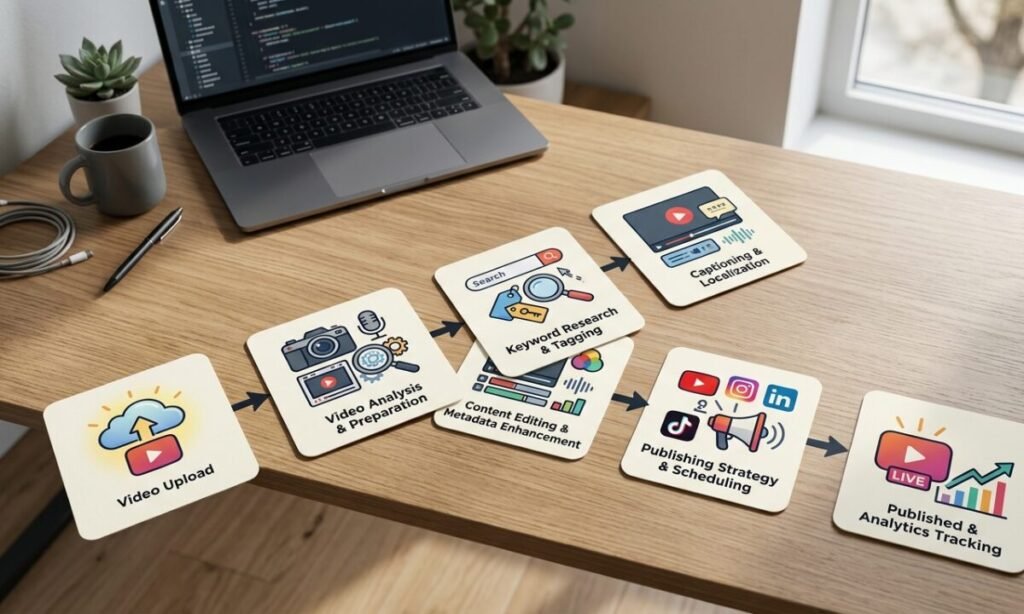
To get your videos noticed and reach a larger audience on YouTube, you need to follow a structured approach to SEO. By focusing on the right strategies, you can improve your ranking, increase views, and grow your channel effectively.
The first step is learning how to research keywords for your videos. Keywords are the words or phrases people type into YouTube when searching for content. You need to find terms that are relevant to your video topic and have a good chance of attracting viewers. You can use tools that auto find popular keywords related to your content, making it easier to target the right audience. By including these keywords naturally in your title, description, and tags, you help YouTube understand what your video is about and show it to viewers who are actively searching for similar content.
Next, focus on optimizing your video title and description. Your title should be clear, compelling, and include your main keyword so that people can easily understand what your video is about. The description should expand on your topic, include additional relevant keywords, and provide useful information or links that add value to your audience. Optimized titles and descriptions not only improve search visibility but also encourage viewers to click and watch your video.
Adding relevant tags and placing your video in appropriate playlists is another important step. Tags tell YouTube what your video is about and help categorize it for search and recommendations. Playlists organize your content into themes, which keeps viewers watching more of your videos, increases watch time, and signals to YouTube that your channel has valuable content.
Creating engaging thumbnails and end screens is crucial for capturing attention and guiding viewers. Thumbnails should be visually appealing, relevant to the video, and consistent with your branding to make your content easily recognizable. End screens allow you to suggest related videos, encourage subscriptions, or highlight other content on your channel, keeping viewers engaged longer.
Finally, using analytics to track performance is essential for improving your YouTube SEO strategy. By monitoring metrics like watch time, audience retention, engagement, and traffic sources, you can see what works and what needs adjustment. Analytics provide insights into how viewers interact with your content, helping you make informed decisions for future videos and ensuring your channel grows steadily.
When you are trying to grow your channel and make your videos more visible, it is easy to make mistakes that can limit your success. Understanding what not to do is just as important as knowing the right strategies. By avoiding these common errors, you can improve your rankings, attract more viewers, and keep your audience engaged.
Ignoring metadata and keyword optimization is one of the biggest mistakes creators make. Metadata includes elements like video tags, titles, descriptions, and categories, which tell YouTube what your video is about. If you skip optimizing these elements or do not use the right keywords, your video may not appear in search results or recommendations, no matter how good the content is. Proper keyword optimization ensures the platform understands your content and shows it to viewers who are looking for it.
Not focusing on watch time and engagement is another problem. YouTube values videos that keep viewers watching and interacting. If your video is long but viewers leave quickly, or if people do not like, comment, or share it, the algorithm will see it as less valuable. To improve your SEO, you need to create content that holds attention, encourages interaction, and keeps viewers on your channel longer.
Overloading videos with tags or using misleading titles is also a common issue. Adding too many tags or including irrelevant keywords can confuse YouTube about what your video is really about. Misleading titles might get clicks at first, but viewers will leave quickly, which hurts your watch time and overall ranking. Always make sure your titles, tags, and keywords are relevant and accurately represent your content.
Skipping closed captions or translations can limit your audience. Closed captions make your videos accessible to people who are hearing impaired and help viewers who prefer watching without sound. Adding translations can expand your reach to international viewers. Without these features, you may miss out on potential subscribers and lower engagement signals, which can reduce your video’s ranking.
By avoiding these mistakes, you ensure that both YouTube and your audience see your content as valuable, relevant, and engaging. Focusing on proper metadata, watch time, accurate titles, and accessibility will help your videos perform better and support steady growth for your channel.
To grow your channel and make your videos more discoverable, you can use a mix of tools and strategies that make SEO easier and more effective. These tools help you find the right keywords, analyze trends, and track performance, while tips for engagement ensure that viewers stay longer and interact with your content.
There are both free and paid SEO tools available for YouTube creators. Free tools, like YouTube’s own search suggestions or basic analytics, can help you see what topics people are searching for and how your videos are performing. Paid tools provide more advanced features, such as detailed keyword analysis, competition tracking, and trend predictions. Using the right tools helps you plan content that matches what viewers want and improves your chances of ranking higher in search results.
One useful strategy is learning how to auto find keywords and trending topics. Some tools allow you to quickly identify high-demand keywords related to your niche and find what people are searching for right now. This ensures your videos target relevant topics and can attract more views. By including these keywords naturally in your titles, descriptions, and tags, you make it easier for the YouTube algorithm to recommend your videos to interested viewers.
Improving engagement and audience retention is also essential for YouTube SEO. To keep viewers watching until the end, focus on creating content that is informative, entertaining, and relevant. Ask viewers to like, comment, and share your videos, and respond to their comments to build a connection. Use clear thumbnails and hooks at the start of your videos to capture attention, and organize your content into playlists so viewers continue watching more of your videos. High engagement signals to YouTube that your content is valuable, increasing the chances it will appear in recommendations and search results.
YouTube SEO is essential for creators because it determines how easily your content can be discovered by viewers. No matter how high-quality your videos are, if they are not optimized for search and recommendations, they may remain hidden from the audience that would appreciate them the most. By understanding SEO, you can make your videos more visible, attract the right viewers, and grow your channel efficiently.
Applying YouTube SEO strategies step by step is the best way to see real results. Start with researching the right keywords and optimizing your titles, descriptions, and tags. Focus on creating engaging thumbnails, using playlists, and adding end screens or cards to guide viewers. Track your performance with analytics to see what works and adjust your approach over time. Each small step contributes to stronger rankings, better engagement, and more loyal subscribers.
The long-term benefits of mastering YouTube SEO are significant. As your videos become more visible, you gain more views, attract a consistent audience, and increase engagement through likes, comments, and shares. Over time, this builds a stronger channel authority, encourages subscriber growth, and positions your content for sustained success. By investing in SEO and applying these strategies consistently, you turn your YouTube channel into a powerful platform for reaching your goals, whether that is growing your brand, sharing your creativity, or building a business online.
SEO in YouTube, or search engine optimization, is the process of making your videos easier to find and more appealing to the platform’s algorithm. It involves optimizing your video titles, descriptions, tags, thumbnails, and other elements so that YouTube can understand your content and show it to viewers who are searching for or interested in similar topics. YouTube SEO also considers viewer behavior, such as watch time, engagement, and audience retention, to determine how valuable your video is and whether it should be recommended to more people.
You can auto find keywords for your videos using various tools designed to analyze search trends and popular terms. Free options include YouTube’s search suggestions, which show what people are typing when searching, and basic analytics to see which words are driving traffic to your videos. Paid tools offer more advanced features, allowing you to discover trending topics, related keywords, and competition levels in your niche. By using these tools, you can identify the most relevant keywords for your content and include them in your titles, descriptions, and tags to improve visibility.
The time it takes to see results from YouTube SEO can vary depending on factors like your channel size, content quality, consistency, and competition. Some creators may notice improvements in views and engagement within a few weeks, while for others, it might take several months. The key is to apply SEO strategies consistently, monitor your analytics, and adjust your approach based on what works. Over time, optimized videos tend to gain more visibility, attract subscribers, and perform better in search and recommendations.
Absolutely. Small channels can benefit greatly from YouTube SEO because it levels the playing field. Even if you have fewer subscribers, optimizing your content for search, recommendations, and engagement can help your videos reach the right audience. By focusing on targeted keywords, creating engaging content, and encouraging interaction, small channels can grow steadily, increase visibility, and attract loyal viewers. With the right strategies, SEO allows your content to compete with larger channels and expand your reach over time.