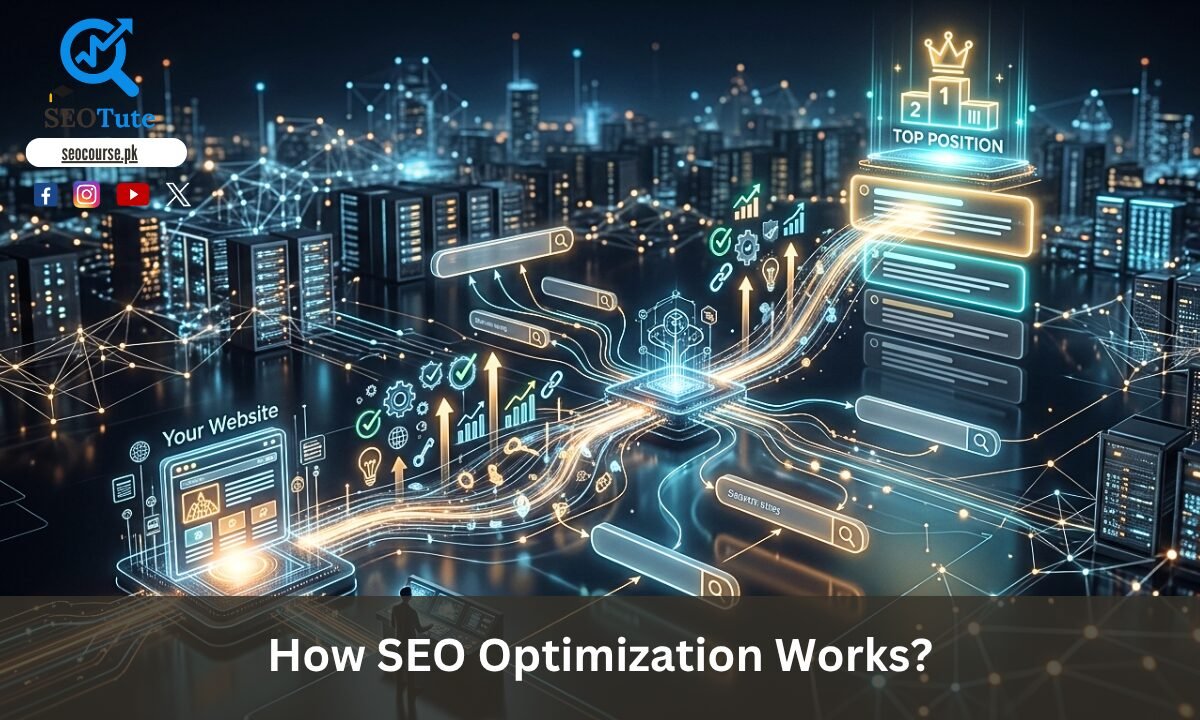

If you want your website to be found online, understanding SEO is essential. SEO, or search engine optimization, is the process of improving your website so that search engines like Google can rank it higher in search results. When your pages rank well, more people can discover your content, visit your site, and engage with your business. SEO is not just about traffic; it’s about attracting the right visitors, increasing your website’s visibility, and building trust with your audience. In today’s digital marketing world, SEO plays a key role in helping your brand grow and reach potential customers efficiently.
In this guide, you will learn how SEO optimization works, step by step. You will understand the mechanisms behind search engine rankings, the principles that make a website valuable, and the strategies that can boost your online presence. You will also see how tools can help you auto find keywords that are relevant to your content, making the process faster and more precise. These tools analyze search trends, competition, and user intent so you can focus on creating content that truly works for your audience.
By the end of this guide, you will have a clear roadmap for improving your website’s SEO. You will be able to take practical steps, avoid common mistakes, and apply strategies that increase your website traffic, improve your rankings, and enhance your online visibility. This is a hands-on guide designed to make SEO understandable and actionable, so you can see real results without getting lost in technical jargon.

SEO, or search engine optimization, is the practice of making your website more attractive to search engines so that it can rank higher in search results. In simple terms, SEO is all about helping search engines understand your content and show it to the people who are searching for information, products, or services like yours. When you optimize your website, you are improving the chances that your web pages will appear when users type relevant keywords, which directly affects how much traffic your site receives.
The connection between SEO, website ranking, and traffic is straightforward. The higher your website ranks on search engine results pages, the more likely people are to click on it. If your pages are optimized correctly, search engines recognize your content as relevant, authoritative, and high-quality. This increases your website’s visibility, which leads to more visitors discovering your business. More traffic not only means more potential customers but also helps your website gain credibility over time.
There are several core benefits to applying effective SEO. First, it increases your organic visibility, meaning people can find your website without paying for ads. Second, it builds your authority, showing search engines and users that your site is a trusted source of information. Third, SEO ensures your content is relevant to the audience you want to reach, which improves engagement and satisfaction. Finally, SEO enhances user experience by making your website easy to navigate, fast to load, and mobile-friendly. By focusing on these benefits, you can create a website that not only ranks well but also serves your visitors effectively, encouraging them to stay longer and return in the future.
To understand how SEO optimization works, you need to know the basic mechanism that search engines use to organize and display information. It all starts with crawling, indexing, and ranking. Crawling is when search engines send out bots to explore your website, following links and scanning your content to understand what each page is about. Indexing comes next, where search engines store and organize the information they collected during crawling. This indexed content becomes part of the search engine’s database, ready to be shown to users when they search. Finally, ranking is the process of deciding which pages appear first in search results. Search engines use complex algorithms to rank pages based on relevance, authority, and quality.
The main ranking factors are divided into three key areas: on-page SEO, off-page SEO, and technical SEO. On-page SEO includes elements on your website itself, like content quality, keyword usage, headings, meta descriptions, and internal links. Off-page SEO refers to actions outside your website that influence your rankings, such as backlinks from other sites, social signals, and online mentions that build your site’s authority. Technical SEO covers the behind-the-scenes elements that help search engines crawl and index your site effectively, like site speed, mobile-friendliness, secure connections (HTTPS), and proper URL structure.
Search engine algorithms evaluate your website based on several key aspects. They assess content quality to ensure your pages provide valuable and accurate information. Relevance is measured by how well your content matches the searcher’s intent, which is why using the right keywords is crucial. Authority is determined by how trustworthy your website appears, often influenced by the quality and number of links pointing to your pages. By optimizing all these factors, you can improve your website’s ranking, increase visibility, and drive more organic traffic. Understanding this mechanism helps you take strategic steps that align with how search engines operate, making SEO more effective for your site.
Step 1: Keyword Research – The first step in SEO is finding the right keywords for your content. Keywords are the words and phrases people type into search engines when looking for information, products, or services. To save time and find the most effective keywords, you can use tools that auto find relevant options based on search volume, competition, and user intent. By choosing the right keywords, you make it easier for search engines to understand your content and connect it to the audience that is searching for it.
Step 2: On-Page Optimization – Once you have your keywords, the next step is on-page SEO. This includes optimizing elements on your website to make it more search engine-friendly. Start with title tags, which appear in search results and tell users and search engines what your page is about. Meta descriptions provide a short summary that can increase click-through rates. Headers (H1, H2, H3) organize your content, making it easy to read and improving relevance. The content itself should be high-quality, informative, and naturally include your target keywords. Proper on-page optimization ensures search engines and users can understand and trust your pages.
Step 3: Off-Page Optimization – Off-page SEO focuses on improving your website’s authority and trustworthiness through external factors. Backlinks, or links from other websites to yours, are a major ranking signal. The more high-quality and relevant sites link to your pages, the more authority your site gains. Social signals, such as shares and mentions on social media, also contribute to your website’s visibility. Off-page SEO builds your reputation online and shows search engines that your content is valuable to others.
Step 4: Technical SEO – Technical SEO ensures your website is easy for search engines to crawl, index, and rank. Key areas include site speed, which affects both user experience and search rankings, and mobile-friendliness, since most users now browse on phones or tablets. Proper indexing and crawlability mean search engines can efficiently discover all your pages. Other technical factors include secure connections (HTTPS), clean URL structures, and fixing errors like broken links. Optimizing these elements keeps your website running smoothly and ensures your content can be properly evaluated by search engines.
Step 5: User Experience (UX) – User experience is critical for SEO because search engines prioritize websites that keep visitors engaged. Focus on clear navigation so users can find what they need quickly, and a clean, professional design that is visually appealing. Track engagement metrics such as time on site, bounce rate, and page views to understand how users interact with your content. A positive UX not only improves your SEO rankings but also encourages visitors to return, share your content, and take actions that support your business goals.

Keyword research is the foundation of effective SEO, and using the right tools can make this process much faster and more accurate. There are several keyword research tools and analytics platforms you can use to identify the terms your audience is searching for. These tools show search volume, competition level, and related keyword suggestions, helping you choose the most relevant and valuable phrases for your content. Some popular platforms also track trends over time, so you can adjust your strategy based on what people are currently searching for.
Artificial intelligence and automated tools take keyword research to the next level by analyzing large amounts of data to auto find ranking opportunities. These tools can identify gaps in your content, suggest long-tail keywords, and even predict which keywords are likely to drive more traffic and conversions. By leveraging AI, you save time and uncover strategies that might not be obvious through manual research. This allows you to focus on creating content that meets user intent while improving your chances of ranking higher in search results.
To get the best results, integrate these tools into your workflow. Start by using them during your content planning stage to select target keywords. Use analytics platforms to monitor how your content performs, track which keywords are driving traffic, and identify areas where you can improve. Regularly revisiting your keyword strategy ensures you stay ahead of changes in search trends and competition. By consistently combining AI-powered tools, analytics, and manual research, you can make your SEO efforts more effective and achieve measurable growth for your website.
When you work on SEO, it’s easy to make mistakes that can hurt your website’s performance. One of the most common errors is overstuffing keywords or ignoring quality signals. Using too many keywords in your content can make it look unnatural and reduce its readability. Search engines are designed to reward content that provides real value, so focusing on quality, relevance, and user experience is more important than simply repeating keywords. By balancing keyword use with high-quality content, you ensure your pages are helpful to readers and favored by search engines.
Another mistake is neglecting technical issues and mobile optimization. Even if your content is excellent, slow page speed, broken links, poor site structure, or non-mobile-friendly pages can prevent search engines from indexing your site correctly. Since most users browse websites on mobile devices, a website that is hard to navigate or slow to load will drive visitors away and negatively affect your rankings. Paying attention to technical SEO and ensuring your site works smoothly on all devices is essential for long-term success.
Finally, not monitoring your rankings or traffic performance can limit your SEO growth. SEO is not a one-time task; it requires regular analysis to understand what works and what needs improvement. By tracking keyword rankings, traffic patterns, and engagement metrics, you can identify opportunities to optimize your content further. Ignoring these insights means you could miss changes in search trends, shifts in user behavior, or issues that affect your website’s visibility. Regular monitoring allows you to make informed decisions, improve your strategy, and maintain steady growth in traffic and rankings.
To know if your SEO efforts are working, you need to track key metrics that show how your website is performing. One of the most important metrics is organic traffic, which measures the number of visitors coming to your site from search engines without paid ads. This shows how visible your website is in search results and how effective your optimization strategies are.
Keyword rankings are another essential metric. They tell you where your pages appear in search results for specific keywords. Tracking rankings over time helps you understand which keywords are driving traffic and which ones need more focus. Click-through rates (CTR) measure how many people click on your link when it appears in search results. A high CTR indicates that your titles, meta descriptions, and content are compelling and relevant to the audience. Engagement metrics, such as time on page, pages per session, and bounce rate, show how visitors interact with your content. High engagement signals that your content meets user intent and provides value, which can further improve rankings.
Continuous monitoring and auditing are critical to maintaining and improving SEO performance. Search engine algorithms change regularly, user behavior evolves, and competition can shift, so what works today may not work tomorrow. By consistently analyzing these metrics, you can identify issues, discover new opportunities, and adjust your strategy to stay ahead. Regular audits help ensure that your website remains optimized, relevant, and aligned with best practices, allowing you to maintain steady growth in traffic, rankings, and user engagement over time.
SEO optimization works by making your website more visible, relevant, and trustworthy to both search engines and users. At its core, it involves understanding how search engines crawl, index, and rank your content. The key components include keyword research to target the right audience, on-page SEO to make your content clear and high-quality, off-page SEO to build authority through backlinks and social signals, technical SEO to ensure your site runs smoothly, and user experience to keep visitors engaged and satisfied. Each of these elements works together to improve your website’s performance and help you achieve higher rankings.
To see real results, you need to approach SEO consistently. Use the steps outlined—researching keywords, optimizing your pages, building authority, managing technical aspects, and improving UX—along with tools that can auto find relevant keywords and opportunities. These tools save time, uncover hidden potential, and help you focus on the areas that will have the most impact.
By understanding and applying these methods regularly, you can steadily increase your website’s visibility, strengthen your authority in your niche, and drive more organic traffic. SEO is not a one-time task; it is a continuous process that rewards patience, strategy, and smart use of resources. When you commit to these practices, your website will become more discoverable, more trusted, and more valuable to your audience over time.
SEO is not an instant process. The time it takes to see results depends on several factors, including your website’s age, competition in your niche, the quality of your content, and how well you implement SEO strategies. Generally, you may start noticing improvements in rankings and traffic within three to six months, but it can take longer for highly competitive keywords. Consistency is key—regularly optimizing your content, building authority, and monitoring performance will gradually lead to stronger and more sustainable results.
Yes, you can. Modern SEO tools and AI-powered platforms allow you to auto find relevant keywords for your content. These tools analyze search volume, competition, and user intent to suggest terms that are most likely to drive traffic and conversions. By using these tools, you can save time, uncover opportunities you might miss manually, and focus on creating content that aligns with what your audience is actively searching for.
On-page SEO refers to all the optimization you do directly on your website. This includes improving content quality, using the right keywords, optimizing title tags and meta descriptions, structuring headers, and enhancing user experience. Off-page SEO, on the other hand, focuses on actions outside your website that improve its authority and credibility. This includes earning backlinks from reputable websites, building a strong social media presence, and generating positive mentions online. Both on-page and off-page SEO work together to boost your rankings and visibility.
You do not need to be a technical expert, but having some basic understanding of technical SEO can be very helpful. Technical SEO involves elements like site speed, mobile-friendliness, secure connections, proper indexing, and crawlability. While many tools and plugins can help automate these tasks, knowing the basics allows you to identify issues, make informed decisions, and ensure your website functions smoothly for both users and search engines. Even a simple understanding can make a significant difference in your SEO performance.