SEO, or search engine optimization, is the process of improving your website so that it ranks higher on search engines like Google. When your site appears on the first page of search results, more people are likely to visit it, which can increase your traffic, leads, and sales. SEO is a key part of digital marketing because it helps your website get noticed without paying for ads, making it a cost-effective way to grow your online presence.
Understanding the different types of SEO are there is essential for improving your website’s performance. Each type focuses on a specific area, such as optimizing content, building links, improving technical elements, or targeting local audiences. By knowing how each type works, you can create a strategy that drives more organic traffic and ensures your website meets the needs of both users and search engines.
If you’re wondering how many types of SEO exist, this guide will explain them clearly, giving you a complete overview of each category and how it can help your website succeed.

SEO, or search engine optimization, is the process you use to make your website more visible on search engines like Google, Bing, or Yahoo. In simple terms, it is about helping your site appear in front of the people who are searching for information, products, or services related to your business. When your website is optimized for search engines, it becomes easier for users to find, which increases the chances of attracting more visitors.
The main purpose of SEO is to improve your website’s ranking in search results. Higher ranking means more people see your site, which drives organic traffic without paying for ads. SEO also improves your website’s visibility, builds trust with users, and strengthens your online presence. Essentially, it helps your website reach the right audience at the right time.
SEO is not just one process; it has different types, and each serves a specific role. Some types focus on optimizing the content on your website, others work on improving technical aspects like site speed and structure, while some types help build authority through backlinks or target local and international audiences. Understanding these types will help you create a complete SEO strategy that maximizes your website’s performance.
SEO is not a single process; it includes several categories, each with a unique strategy and goal to help your website perform better. Knowing these categories is important because focusing on the right type of SEO can improve your website’s ranking, attract the right audience, and increase organic traffic.
The main categories of SEO are:
Each type of SEO has its own strategy and goal, but together they create a complete plan to improve your website’s performance, attract the right audience, and achieve higher rankings in search engines. By understanding these categories, you can focus on the areas that will make the biggest impact for your website.
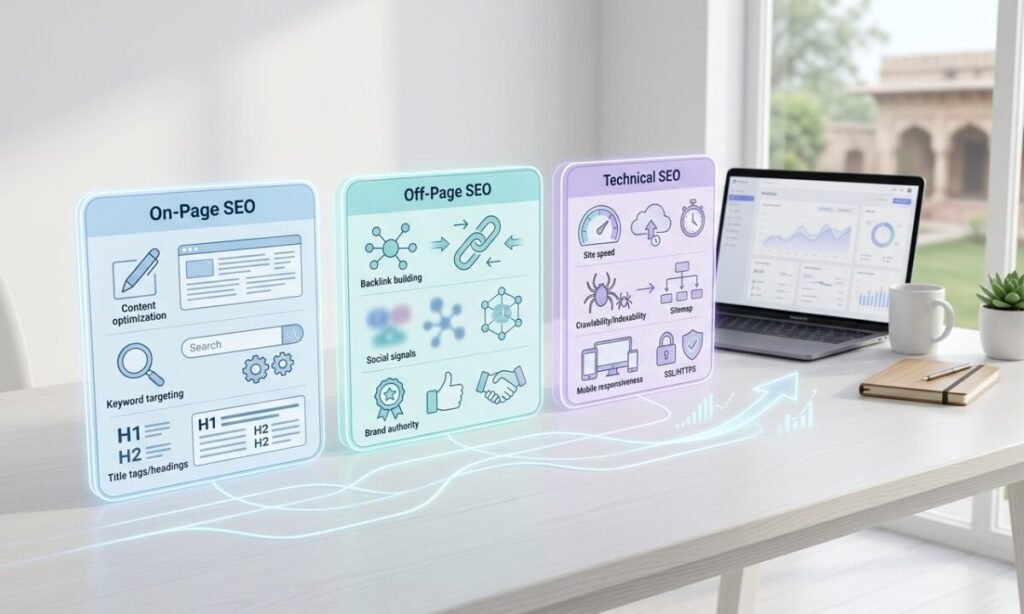
Understanding each type of SEO is essential for building a strong online presence. Each category focuses on specific strategies that help your website rank higher, attract the right audience, and improve user experience. Here’s a closer look at the main types of SEO techniques and what they involve:
On-Page SEO: This type of SEO focuses on the content and elements on your own website. You need to use the right keywords naturally in your articles, headings, and meta tags. Meta tags, including title tags and meta descriptions, help search engines understand what your page is about. Content optimization ensures your pages answer user questions clearly and provide value. Effective On-Page SEO makes it easier for both search engines and users to understand your site.
Off-Page SEO: Off-Page SEO is about building your website’s reputation and authority outside of your own pages. Backlinks from trusted websites show search engines that your content is credible. Social signals, such as shares and mentions, also contribute to your site’s popularity. A strong online reputation helps your website gain trust and rank higher.
Technical SEO: This focuses on the backend structure of your website. Site speed is critical because slow-loading pages drive visitors away. Crawlability ensures search engines can read and index your pages without issues. Using structured data, like schema markup, helps search engines understand your content and display it in rich results, increasing visibility.
Local SEO: If your business serves a specific location, Local SEO is vital. Managing your Google Business Profile, building local citations, and encouraging reviews help your site appear in local searches. Local SEO ensures people near your business can find you easily.
E-commerce SEO: Online stores rely on this type of SEO. It focuses on optimizing product pages with detailed descriptions, high-quality images, and schema markup to make products easier to find in search results. Customer reviews add credibility and improve rankings. E-commerce SEO helps drive targeted traffic to your store.
Video SEO: Videos are becoming an important part of online content. Video SEO involves optimizing your video titles, descriptions, tags, and thumbnails. Adding transcripts improves accessibility and helps search engines understand the content. Properly optimized videos can appear in search results and on platforms like YouTube, attracting more viewers.
Image SEO: Images can drive traffic if optimized correctly. Using descriptive file names, alt text, and compression ensures images load quickly and appear in search results. Image SEO improves user experience and can help your pages rank better.
Mobile SEO: Many users browse on smartphones and tablets, so your website must be mobile-friendly. Responsive design adapts your site to different screen sizes, and optimizing page speed ensures visitors have a smooth experience. Mobile SEO is critical because search engines prioritize mobile-friendly sites.
International SEO: If your audience is global, International SEO helps your website reach users in different countries and languages. Using hreflang tags and creating multi-language content ensures search engines display the right version of your site to the right audience.
Semantic SEO: This type focuses on understanding the search intent behind queries rather than just matching keywords. It uses entities, topics, and concepts to create content that answers user questions more effectively. Semantic SEO helps your website provide relevant, authoritative content that search engines value.
To get the best results from SEO, you need to analyze your website and understand your audience first. This means looking at how your website is performing, which pages attract visitors, and what users are searching for. By understanding your audience’s needs and behavior, you can choose the right types of SEO tools are there to focus on. For example, if most of your visitors come from mobile devices, Mobile SEO should be a priority. If you have a local business, Local SEO will have a bigger impact.
There are tools and methods that can help you auto find the best SEO strategies for your website. Analytics tools like Google Analytics and Google Search Console give insights into which pages are performing well and which need improvement. Keyword research tools help you identify what your audience is searching for and the right terms to target. SEO audit tools can automatically scan your website to highlight technical issues, on-page problems, or opportunities to improve rankings. These tools save time and give you clear guidance on where to focus your efforts.
Once you know which SEO types are most important, you can start applying them effectively. Begin with small steps, such as optimizing high-traffic pages for relevant keywords, improving site speed, or building quality backlinks. Monitor your results regularly to see which strategies are working and adjust as needed. By combining audience insights, automated tools, and practical action, you can create an SEO plan that drives more traffic, improves rankings, and grows your online presence.
Focusing on just one type of SEO can help, but combining multiple types gives your website much stronger results. Each category of SEO addresses a different part of your website’s performance, and when you apply them together, they support each other. For example, On-Page SEO ensures your content is optimized for keywords, while Technical SEO makes sure your site loads fast and is easy for search engines to crawl. Off-Page SEO builds your website’s authority, and Mobile SEO ensures users have a smooth experience on any device. By using multiple types together, you improve your rankings, attract more visitors, and create a better overall user experience.
Combining SEO types also helps you cover more opportunities for growth. Local SEO can bring in nearby customers, while Semantic SEO ensures your content matches search intent. Video and Image SEO can drive traffic from different sources, and E-commerce SEO can improve product visibility for online stores. This comprehensive approach gives you a competitive advantage because your website performs well in many areas at the same time.
Understanding these categories and how they work together improves your overall SEO strategy. When you know which types to prioritize and how to integrate them, you can make smarter decisions, allocate resources efficiently, and achieve better long-term results. A well-rounded strategy ensures your website attracts the right audience, provides valuable content, and maintains strong visibility across search engines.
SEO is made up of several types, and each serves a specific purpose to improve your website’s performance. On-Page SEO helps optimize your content and keywords, making your pages clear and useful for users and search engines. Off-Page SEO builds authority through backlinks and social signals, showing that your website is trustworthy. Technical SEO ensures your site loads fast, is easy to crawl, and uses structured data to help search engines understand your content.
Other types, like Local SEO, target nearby customers, while E-commerce SEO improves product visibility for online stores. Video and Image SEO help you reach audiences through multimedia, and Mobile SEO ensures a smooth experience for users on any device. International SEO expands your reach to global audiences, and Semantic SEO focuses on search intent, helping your content answer user questions more effectively.
Understanding these SEO types is important because it allows you to create a complete strategy that covers all areas of your website. Take time to assess your website, analyze your audience, and decide which types of SEO will have the biggest impact. Start with the areas where improvements will give you the most traffic and visibility, and gradually expand to other types.
To make this process easier, explore SEO tools that can auto find the strategies and optimizations that work best for your site. These tools provide insights and recommendations, helping you focus your efforts efficiently and achieve better results. By combining the right SEO types and using the right tools, you can grow your website’s visibility, attract the right audience, and improve your overall online presence.
Deciding how many types of SEO to use depends on your website, goals, and audience. Ideally, you should use a combination of SEO types to cover all areas of your website’s performance. For example, On-Page SEO and Technical SEO are essential for almost every site because they ensure your content is optimized and your website runs smoothly. If your business targets local customers, adding Local SEO is important. For online stores, E-commerce SEO is a must, and if you use videos or images to engage your audience, Video SEO and Image SEO will help attract more traffic.
The key is to focus on the types of SEO that provide the most value first. You don’t need to apply every type at once. Start with the areas that can give the biggest improvements in visibility, traffic, and user experience, then expand to other categories over time.
Yes, there are tools and software that can help you auto find the SEO types and strategies that will work best for your website. SEO audit tools can scan your site and show which areas need improvement, whether it’s on-page content, technical issues, or backlink opportunities. Keyword research tools help identify what your audience is searching for, guiding your content optimization. Using these tools allows you to make informed decisions and prioritize the SEO types that will bring the most results for your specific site.
While all types of search engine optimization contribute to long-term growth, some can produce faster results than others. On-Page SEO, for example, can improve your rankings relatively quickly if you optimize existing content and target high-value keywords. Technical SEO fixes, like improving site speed or fixing broken links, can also have an immediate impact on user experience and search rankings. Off-Page SEO, such as building high-quality backlinks, may take longer but strengthens your site’s authority over time.